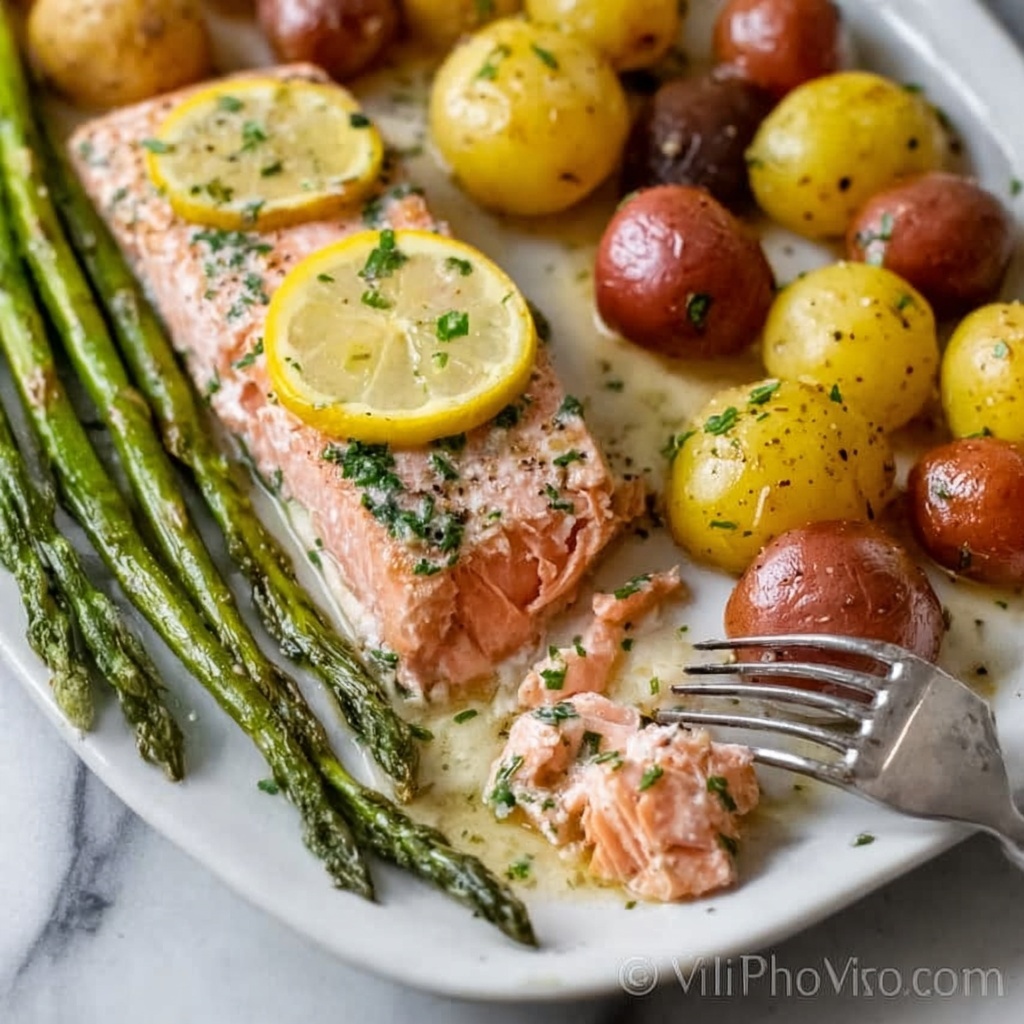
If you are looking for a dish that beautifully balances wholesome flavors, effortless cooking, and vibrant colors, the Oven-Baked Salmon with Potatoes and Asparagus Recipe is your new best friend in the kitchen. This recipe is a harmonious medley of tender salmon, crispy roasted potatoes, and perfectly cooked asparagus, all enriched by a lively marinade of lemon, garlic, and herbs. Not only does it come together easily on a single sheet pan, but it also delivers a comforting yet fresh meal that feels special enough for guests yet simple enough for a weeknight dinner.

Ingredients You’ll Need
Each ingredient in this Oven-Baked Salmon with Potatoes and Asparagus Recipe has a purpose, adding a layer of flavor, texture, or freshness that makes the dish truly shine. From the rich olive oil to the bright lemon juice and aromatic herbs, these essentials work in perfect harmony.
- Extra virgin olive oil (2 tablespoons + 1 1/2 tablespoons, divided): Adds richness and helps the salmon and vegetables roast to golden perfection.
- Fresh lemon juice (2 tablespoons): Brings brightness and helps tenderize the salmon.
- Honey (1 teaspoon): Balances acidity with a touch of natural sweetness.
- Garlic (2 cloves, finely minced or 1/2 teaspoon garlic powder): Infuses the dish with warm, savory depth.
- Coarse salt (1/2 teaspoon + 1/4 teaspoon + a pinch): Elevates every component’s natural flavor.
- Dried oregano (1/2 teaspoon): Gives a subtle herbal note typical of Mediterranean flavors.
- Dried basil (1/2 teaspoon): Adds fragrant, fresh flavor complexity.
- Salmon fillets (4, 6-ounce each): The star protein that’s moist and flaky when cooked just right.
- Red or yellow potatoes (1 1/2 pounds, cut into 1-inch pieces): Roasting these brings out their natural sweetness and results in a pleasantly crispy bite.
- Black pepper (pinch): Provides subtle heat and depth.
- Asparagus (1 pound, cut into 1 1/2-inch pieces): Adds bright green freshness and a tender-crisp texture.
- Fresh chopped parsley: A finishing touch of color and herbaceous brightness.
- Lemon wedges or slices: Perfect for squeezing over the finished plate to amplify the citrusy zing.
How to Make Oven-Baked Salmon with Potatoes and Asparagus Recipe
Step 1: Preheat and Prepare
Begin by preheating your oven to 425 degrees Fahrenheit and place your sheet pan inside to warm up. This little trick ensures the potatoes get a great jump-start on roasting as soon as they hit the pan, which is key for that golden, crispy exterior.
Step 2: Whip Up the Marinade
In a small bowl, whisk together extra virgin olive oil, fresh lemon juice, honey, finely minced garlic, coarse salt, dried oregano, and dried basil. This marinade is a powerhouse blend that will add layers of bright, savory, and slightly sweet flavors to the salmon. Don’t be shy about coating the top of each fillet thoroughly with this mixture for maximum flavor.
Step 3: Marinate the Salmon
Place your salmon fillets in a shallow dish and drizzle the marinade generously over them. Use a brush or your hands to rub it evenly across the surface. After coating, pop the salmon in the refrigerator so the flavors meld while you prepare the rest of the dish.
Step 4: Season the Potatoes
Throw your cut potatoes into a bowl and toss them with 1 tablespoon of olive oil, 1/4 teaspoon coarse salt, and a pinch of black pepper. This simple seasoning lets their natural flavor shine while ensuring they roast beautifully crisp on the outside and tender inside.
Step 5: Start Roasting the Potatoes
Carefully remove the hot sheet pan from the oven and spread the seasoned potatoes on one side in an even layer. Pop them back in the oven for 15 minutes. This head start is essential because potatoes take longer to roast than asparagus or salmon.
Step 6: Add Asparagus and Salmon
After the potatoes have enjoyed their initial roast, give them a good toss to turn over their crispy edges. Now add the asparagus on top, drizzle with about a teaspoon of olive oil, and sprinkle with a pinch of coarse salt. On the opposite side of the pan, lay out your marinated salmon fillets in a single layer, pouring any leftover marinade from the dish over the fish for extra zing.
Step 7: Finish Baking
Return the pan to the oven and bake everything together for 8 to 10 minutes. The salmon should flake easily with a fork and have an internal temperature of about 135 to 145 degrees Fahrenheit. Meanwhile, the asparagus should be crisp-tender, delivering that perfect pop of spring freshness.
Step 8: Final Touches and Serve
If your salmon has skin, gently remove it before plating. Arrange the salmon next to your roasted potatoes and asparagus, then garnish generously with freshly chopped parsley and add lemon wedges or slices on the side. A quick squeeze of lemon just before enjoying elevates the whole dish with a burst of citrusy brightness.
How to Serve Oven-Baked Salmon with Potatoes and Asparagus Recipe
Garnishes
Fresh parsley is a classic finishing herb that brings vibrant green color and a hint of peppery freshness, balancing the richness of salmon. Lemon wedges are an absolute must; a squeeze over the top just before eating enlivens each bite with an irresistible zing that cuts through the buttery texture.
Side Dishes
This recipe is wonderful as a complete meal on its own, but if you want to round it out, a simple green salad with a light vinaigrette or a bowl of quinoa makes excellent companions. The salad offers crispness and acidity, while quinoa adds a nutty, protein-rich grain that complements the meal’s heartiness.
Creative Ways to Present
For a crowd, serve the salmon fillets sliced atop the bed of roasted potatoes and asparagus to showcase the flaky texture and vibrant colors. Alternatively, arrange individual plates by fanning the asparagus alongside potato stacks with a salmon filet resting on top, drizzle some of the pan juices on the plate, and garnish with parsley and lemon for a restaurant-worthy vibe at home.
Make Ahead and Storage
Storing Leftovers
Allow leftover salmon, potatoes, and asparagus to cool completely, then store in airtight containers in the refrigerator for up to 3 days. Keeping components separate if possible preserves their texture best, especially the asparagus which can become soggy.
Freezing
While salmon freezes well, roasted potatoes and asparagus may lose some texture after thawing. If you plan to freeze, wrap salmon tightly in plastic wrap and foil, then freeze for up to 2 months. It’s best to freeze salmon alone and prepare fresh vegetables when ready to eat.
Reheating
Reheat leftovers gently in a low oven (300 degrees Fahrenheit) to prevent overcooking the salmon. Alternatively, use a microwave on medium power for short bursts, checking often to avoid drying out. Adding a small splash of water or lemon juice before reheating can help keep everything moist.
FAQs
Can I use frozen salmon fillets for this Oven-Baked Salmon with Potatoes and Asparagus Recipe?
Yes, you can use frozen salmon; just be sure to thaw it completely in the refrigerator before marinating and cooking. This ensures even cooking and that the marinade penetrates the fish well.
What if I don’t have fresh asparagus? Can I use another vegetable?
Absolutely! Green beans, broccoli florets, or even Brussels sprouts can be substituted. Just adjust the roasting time slightly since some vegetables may cook faster or slower than asparagus.
Is it necessary to remove the skin from the salmon?
No, the skin can be left on during baking as it helps keep the fish moist. It can be removed after cooking if preferred, but many enjoy the crispy skin as well.
Can I double this recipe for a larger group?
Yes, doubling the ingredients works well. Just be sure you have a large enough baking sheet or use two pans to avoid overcrowding, which might prevent proper roasting.
How can I tell when the salmon is perfectly cooked?
The salmon should flake easily with a fork and have an opaque color throughout. Using a meat thermometer, aim for an internal temperature between 135 to 145 degrees Fahrenheit for moist and tender fish.
Final Thoughts
This Oven-Baked Salmon with Potatoes and Asparagus Recipe is genuinely a gem if you want an easy yet impressive meal that bursts with flavor and looks beautiful on the plate. Its simplicity and wholesomeness paired with the fresh herbaceous notes make it one of those dishes you’ll want to keep in your weekly rotation. Give it a try, and I promise it will quickly become a personal favorite you’ll be excited to share with friends and family.
Print
Oven-Baked Salmon with Potatoes and Asparagus Recipe
- Prep Time: 15 minutes
- Cook Time: 25 minutes
- Total Time: 40 minutes
- Yield: 4 servings
- Category: Main Course
- Method: Baking
- Cuisine: American
- Diet: Low Fat
Description
This Oven-Baked Salmon with Potatoes and Asparagus is a simple, healthy, and flavorful meal that’s perfect for a weeknight dinner. The salmon is marinated in a zesty lemon, garlic, and herb mixture, then baked alongside tender, golden potatoes and crisp-tender asparagus. Garnished with fresh parsley and lemon wedges, this dish offers a balanced combination of protein, vegetables, and comforting roasted potatoes.
Ingredients
Salmon Marinade
- 2 tablespoons extra virgin olive oil
- 2 tablespoons fresh lemon juice
- 1 teaspoon honey
- 2 cloves garlic, finely minced (or 1/2 teaspoon garlic powder)
- 1/2 teaspoon coarse salt
- 1/2 teaspoon dried oregano
- 1/2 teaspoon dried basil
Salmon and Vegetables
- 4 (6-ounce) salmon fillets
- 1 1/2 pounds red or yellow potatoes, cut into 1-inch or slightly smaller pieces
- 1 1/2 tablespoons extra virgin olive oil, divided
- 1/4 teaspoon coarse salt, plus a pinch more for sprinkling over the asparagus
- Pinch black pepper
- 1 pound asparagus, cut into 1 1/2-inch pieces
Garnish
- Fresh, chopped parsley
- Lemon wedges or slices
Instructions
- Preheat Oven and Prepare Sheet Pan: Preheat your oven to 425 degrees F and place a sheet pan inside to heat. This will help to start cooking the potatoes on hot surface contact as soon as you add them.
- Make the Marinade: In a small bowl, whisk together olive oil, lemon juice, honey, minced garlic, salt, oregano, and basil. This mixture will impart bright and herbaceous flavors to the salmon.
- Marinate the Salmon: Place the salmon fillets in a shallow dish and drizzle the marinade over them, brushing or rubbing the marinade thoroughly over the top surfaces of each fillet. Place the dish in the refrigerator to let the flavors meld while you prepare the vegetables.
- Prepare the Potatoes: In a separate bowl, toss the cut potatoes with 1 tablespoon of olive oil, 1/4 teaspoon of coarse salt, and a pinch of black pepper until evenly coated.
- Start Roasting Potatoes: Carefully remove the hot sheet pan from the oven and evenly spread the potatoes on one half of the pan. Return to the oven and bake for 15 minutes to begin roasting.
- Add Asparagus and Toss Potatoes: After 15 minutes, remove the pan, toss the potatoes well to ensure even cooking, then scatter the asparagus pieces over the potatoes. Drizzle asparagus lightly with a teaspoon of olive oil and sprinkle a pinch of coarse salt.
- Add the Salmon: Arrange the marinated salmon fillets in a single layer on the other half of the sheet pan. Pour any remaining marinade from the dish over the salmon to boost flavor.
- Bake Until Cooked: Return the pan to the oven and bake for an additional 8 to 10 minutes, or until the salmon flakes easily with a fork and reaches an internal temperature of 135 to 145 degrees F. The asparagus should be crisp-tender at this point.
- Serve: If desired, remove the skin from the salmon fillets. Serve the salmon alongside the roasted potatoes and asparagus, garnished with freshly chopped parsley and lemon wedges or slices for added brightness.
Notes
- Cut potatoes into uniform pieces to ensure even roasting.
- Adjust internal salmon temperature based on preference, but USDA recommends minimum 145°F for safety.
- Use fresh lemon juice for best flavor in the marinade.
- Leftover salmon can be refrigerated for up to 2 days and reheated gently to avoid drying out.
- For a gluten-free meal, verify all ingredients are gluten-free, especially honey and dried herbs.
- Optionally, substitute asparagus with other quick-roasting vegetables like green beans or broccoli.