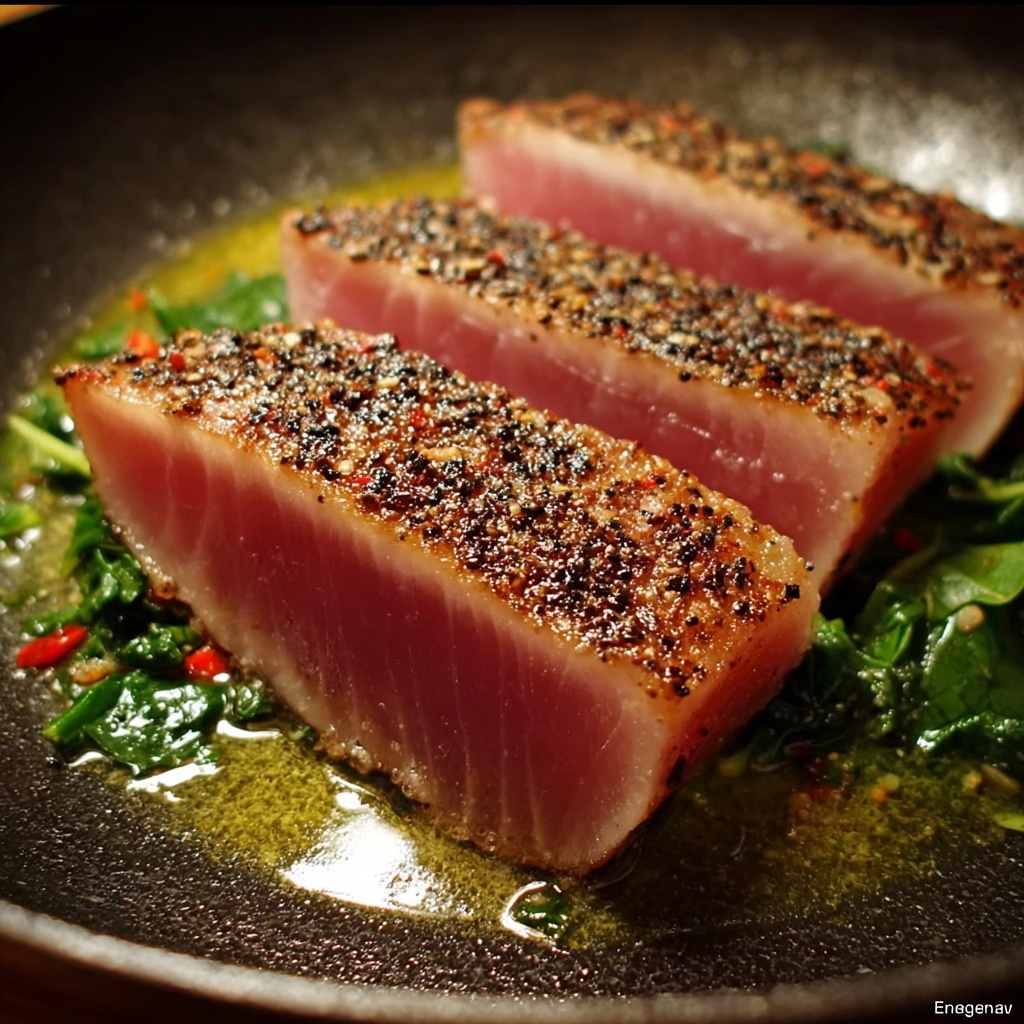
If you’re craving a quick yet impressive meal that feels restaurant-worthy but comes together in a flash, this Seared Tuna Steaks Recipe is exactly what you need. Imagine beautiful, tender tuna steaks with a perfectly caramelized crust on the outside and a melt-in-your-mouth rare center. This dish bursts with fresh flavors and requires minimal ingredients, making it an ideal choice for busy weeknights or a special date night. Trust me, once you master this simple technique, searing tuna steaks will become one of your favorite go-to meals.
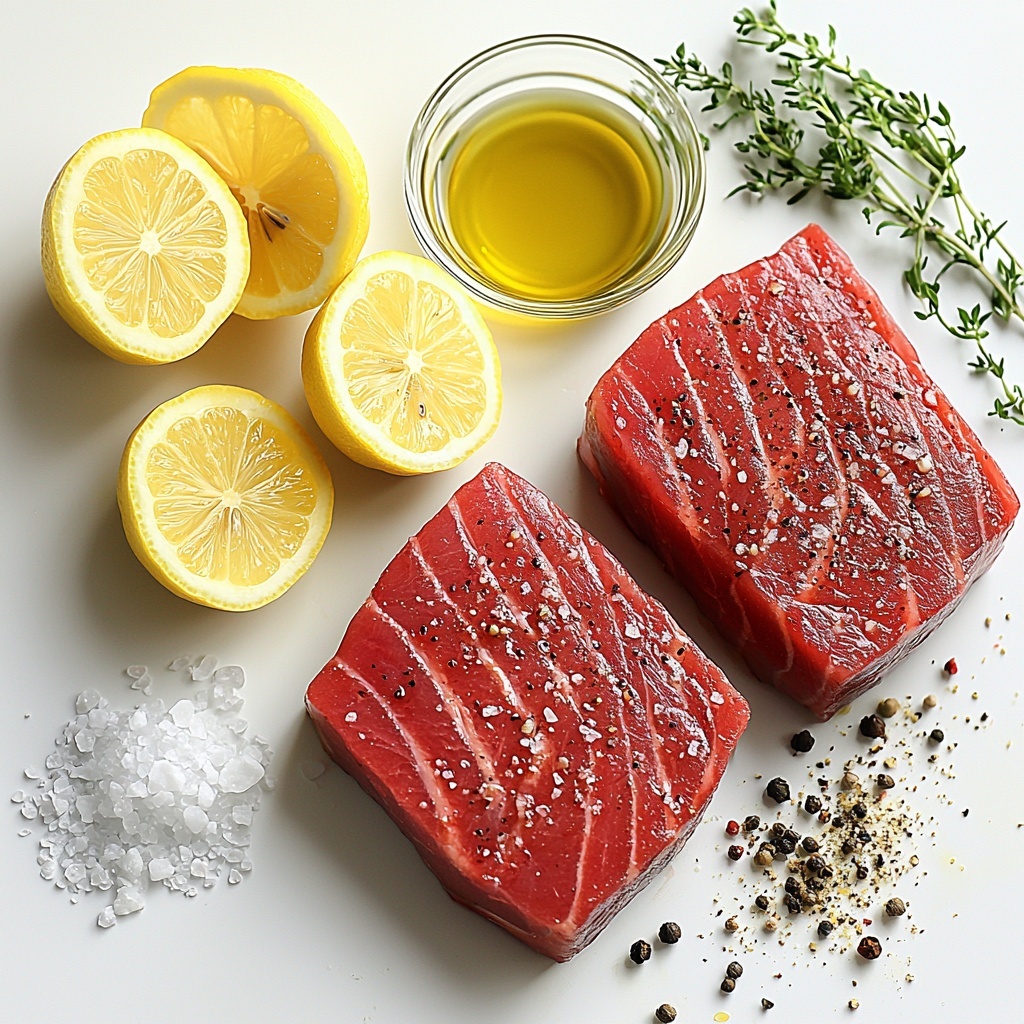
Ingredients You’ll Need
These ingredients are delightfully simple and all essential to achieving that perfect balance of flavor and texture in this dish. Each one plays an important role, from seasoning to searing, ensuring your tuna steaks come out tender, juicy, and delicious every time.
- 2 tuna steaks (6–8 oz each): Fresh, sushi-grade tuna is best for the most tender and flavorful results.
- Salt and freshly ground black pepper, to taste: Basic but critical seasonings that enhance the natural flavors of the tuna.
- 1 tablespoon neutral oil (grapeseed, avocado, or canola): A high smoke-point oil is key for a proper sear without burning.
- Lemon wedges, for serving (optional): Bright, zesty lemon adds a fresh contrast to the savory steak.
How to Make Seared Tuna Steaks Recipe
Step 1: Heat Your Pan
Start by heating a large, heavy-bottomed sauté pan or cast-iron skillet over medium-high heat until it’s extremely hot. This high heat is essential for creating that gorgeous crispy crust on the outside of the tuna while keeping the inside perfectly rare.
Step 2: Prepare the Tuna
Pat your tuna steaks dry thoroughly using paper towels. Moisture on the surface of the fish can prevent a proper sear, so this step will help you develop that beautiful, caramelized crust.
Step 3: Season Generously
Next, season both sides of the tuna steaks liberally with salt and freshly ground black pepper. This simple seasoning allows the natural flavor of the tuna to shine through while adding a touch of savory depth.
Step 4: Add Oil and Sear
Pour your neutral oil into the hot pan, swirling to coat evenly. Once the oil is shimmering and just starting to smoke, carefully lay your tuna steaks in the pan. The sizzling sound means you’re on the right track!
Step 5: Perfect the Sear
Sear each side for 30 seconds to 1 minute, depending on your preferred level of doneness. For the classic seared tuna experience, aim for a barely cooked center that remains pink to red—this is where tuna truly shines.
Step 6: Rest the Steaks
Once seared, transfer the tuna to a cutting board and let it rest for about 5 minutes. Resting helps redistribute the juices inside the steaks so they stay moist and tender when sliced.
Step 7: Slice and Serve
Using a very sharp knife, slice the tuna thinly against the grain to maximize tenderness. Serve immediately, optionally with fresh lemon wedges on the side to brighten the flavors and add a zesty pop.
How to Serve Seared Tuna Steaks Recipe
Garnishes
When it comes to garnishing your seared tuna steaks, less is definitely more. A few fresh lemon wedges are a classic choice, adding a juicy acidity that perfectly complements the rich tuna. You can also sprinkle a little toasted sesame seeds or finely chopped fresh herbs like parsley or chives for a subtle crunch and color contrast.
Side Dishes
This Seared Tuna Steaks Recipe pairs beautifully with light, fresh sides. Consider a simple mixed greens salad tossed with a citrus vinaigrette, steamed or sautéed asparagus, or even a bed of jasmine rice to soak up any juices. For a more Mediterranean vibe, roasted vegetables or a quinoa salad also work incredibly well alongside.
Creative Ways to Present
Want to impress your guests? Arrange thin slices of the tuna artistically on a chilled plate in a fan shape, drizzle a bit of soy sauce or ponzu around the edges, and add a few microgreens atop. Alternatively, turn the slices into a vibrant seared tuna poke bowl with avocado, cucumber, and pickled ginger for a modern, playful twist.
Make Ahead and Storage
Storing Leftovers
If you happen to have leftovers, store your seared tuna steaks in an airtight container in the refrigerator. Consume within 1 to 2 days for the best flavor and texture, as fresh tuna is delicate and doesn’t hold up well over time.
Freezing
Because this recipe is best enjoyed fresh, freezing isn’t recommended. Freezing cooked tuna steaks often affects the texture negatively, resulting in dry, less tender fish upon thawing.
Reheating
When it’s time to enjoy your leftovers, gently warm the tuna briefly in a pan over low heat just until warmed through, or better yet, eat it cold or at room temperature to preserve the delicate texture. Avoid overheating to prevent drying out the fish.
FAQs
Can I use frozen tuna steaks for this Seared Tuna Steaks Recipe?
Yes, you can use frozen tuna steaks, but make sure to thaw them completely and pat dry before cooking to achieve the best sear. Fresh tuna is preferred for optimum flavor and texture.
How rare should tuna be when seared?
Tuna tastes best when seared quickly on the outside and left rare or medium-rare inside. This preserves its tender, buttery texture and delicate flavor.
What’s the best type of oil for searing tuna?
Choose a neutral oil with a high smoke point, such as grapeseed, avocado, or canola oil, to prevent burning and allow a perfect sear.
Can I add spices or marinades to this Seared Tuna Steaks Recipe?
You certainly can experiment with spices or light marinades, but the classic version lets the tuna’s natural flavor shine. If using a marinade, keep it short (under 30 minutes) to avoid overpowering the fish.
Is it safe to eat tuna when it’s rare?
Yes, when using fresh, sushi-grade tuna, eating it rare or even raw is safe. Be sure to buy your tuna from a trusted source to ensure quality and freshness.
Final Thoughts
I hope this warm and straightforward Seared Tuna Steaks Recipe inspires you to bring a bit of gourmet magic into your kitchen without any fuss. There’s something so satisfying about that perfect sear and juicy center, and once you get it down, you’ll want to make it again and again. So grab those tuna steaks and get cooking — your taste buds will thank you!
Print
Seared Tuna Steaks Recipe
- Prep Time: 2 minutes
- Cook Time: 3 minutes
- Total Time: 5 minutes
- Yield: 2 servings
- Category: Main Course
- Method: Frying
- Cuisine: American
- Diet: Low Fat
Description
This Seared Tuna Steaks recipe offers a quick and flavorful way to enjoy fresh tuna with a perfectly seared crust and a tender, rare center. Ready in just 5 minutes, it’s ideal for a light, healthy meal with simple seasonings and optional lemon wedges for brightness.
Ingredients
Seafood
- 2 tuna steaks (6–8 oz each)
Seasonings and Oils
- Salt, to taste
- Freshly ground black pepper, to taste
- 1 tablespoon neutral oil (grapeseed, avocado, or canola)
Optional
- Lemon wedges, for serving
Instructions
- Preheat the pan: Heat a large, heavy-bottomed sauté pan or cast-iron skillet over medium-high heat until it is very hot, which will help create a perfect sear on the tuna steaks.
- Dry the tuna: Pat the tuna steaks dry with paper towels thoroughly to remove excess moisture, ensuring a nice crust forms when seared.
- Season the steaks: Generously season both sides of the tuna steaks with salt and freshly ground black pepper to enhance the natural flavor of the fish.
- Add oil to the pan: Pour the tablespoon of neutral oil into the hot pan. Wait until the oil is shimmering and hot before adding the tuna.
- Cook the tuna: Carefully place the tuna steaks in the pan. Sear them for 30 seconds to 1 minute on each side depending on your preferred level of doneness, aiming for a rare center.
- Rest the tuna: Remove the tuna steaks from the pan and let them rest for about 5 minutes to allow juices to redistribute and keep the fish moist.
- Slice and serve: Using a sharp knife, slice the tuna steaks thinly and serve immediately, garnished with lemon wedges if desired for added freshness and acidity.
Notes
- For best results, use sushi-grade tuna steaks to enjoy the best flavor and texture.
- The searing time can be adjusted to your preference; less time for very rare, longer for medium rare.
- Make sure the pan is very hot before adding the tuna to get a good crust without overcooking the inside.
- Lemon wedges add a bright contrast that complements the richness of the tuna.
- Serve immediately after slicing for optimal flavor and texture.